What the ICC arrest warrants mean for Israel's Netanyahu and Hamas leaders What are the powers of the International Criminal Court, and could Netanyahu or Hamas leaders be tried for war crimes?
What the ICC arrest warrants mean for Israel's Netanyahu and Hamas leaders
What are the powers of the International Criminal Court, and could Netanyahu or Hamas leaders be tried for war crimes?

An exterior view of the International Criminal Court in The Hague, Netherlands, Mar 31, 2021. (File photo: REUTERS/Piroschka van de Wouw)
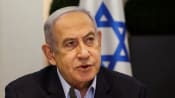
THE HAGUE: The prosecutor's office of the International Criminal Court has requested arrest warrants for Israeli Prime Minister Benjamin Netanyahu, his defence chief and three Hamas leaders for alleged war crimes and crimes against humanity.
Here is a look at what happens next, and how the ICC prosecutor's move might impact diplomatic relations and other court cases focused on Gaza.
WHAT IS THE ICC AND WHAT ARE ITS POWERS?
The ICC is the world’s first permanent, international criminal court. It was established in 2002 by a treaty called the Rome Statute to hold accountable those who commit acts of mass inhumanity.
The court, based in The Hague, has a prosecutor who can investigate and propose charging individuals with war crimes, crimes against humanity, genocide and the crime of aggression.
The ICC can pursue cases when a country asks for an investigation within its territory or of its citizens, when the UN Security Council requests a probe, or when an ICC panel of judges authorises an inquiry initiated by the court’s prosecutor.
The prosecutor also must ascertain that domestic legal systems aren’t genuinely seeking justice.
The court cannot impose the death sentence. Those sentenced to imprisonment serve their terms at the ICC’s detention centre within a Dutch prison. Currently, 124 countries are parties to the Rome Statute. China, the United States and Russia are among those that are not.
WHAT HAPPENS NEXT AT ICC?
Prosecutor Karim Khan's request goes to a pre-trial chamber. The chamber will be composed of three magistrates - presiding judge Iulia Motoc of Romania, Mexican judge Maria del Socorro Flores Liera and judge Reine Alapini-Gansou of Benin.
There is no deadline for judges to decide whether to issue arrest warrants. In previous cases, judges have taken anywhere from just over a month to several months.
If the judges agree there are "reasonable grounds" to believe war crimes or crimes against humanity have been committed, they will issue an arrest warrant. The warrant must name the person, the specific crimes for which an arrest is sought and a statement of facts which are alleged to constitute those crimes.
Judges can amend arrest warrant requests and grant only portions of what the prosecutor is seeking. Charges can also be changed and updated later.
Israeli and Hamas leaders have dismissed allegations of committing war crimes, and representatives of both sides criticised Khan's decision.
COULD NETANYAHU BE TRIED FOR WAR CRIMES?
It’s unlikely. The ICC doesn’t permit trials in absentia, and the court is unlikely to get its hands on him or any other Israeli official.
It relies on its member states to make arrests, and Israel is not a party to the ICC. The court has, for instance, been unable to execute its warrant against Putin.
But being charged could limit the countries to which Netanyahu could travel without fear of arrest. Even some countries that are ICC members, such as Hungary, have argued that the court’s arrest warrants aren’t binding in their territory.
The sanction for an ICC signatory state for not arresting someone is a referral back to the ICC's assembly of member states and ultimately a referral to the UN Security Council.
There are no restrictions on political leaders, lawmakers or diplomats from meeting individuals with an ICC arrest warrant against them. Politically, however, the optics of this may be bad.
WHAT ABOUT HAMAS LEADERS?
The “State of Palestine” is a party to the ICC, so in theory some future governing authority in the Gaza Strip, where Hamas chief Yahya Sinwar, and Mohammed Al-Masri, the commander-in-chief of the military wing, are thought to be in hiding, could turn them over to the court.
Ismail Haniyeh is based in Qatar, which is not an ICC member.
CAN AN ICC INVESTIGATION OR WARRANT BE PAUSED?
The court's rules allow for the UN Security Council to adopt a resolution that would pause or defer an investigation or a prosecution for a year, with the possibility of renewing that indefinitely.
In past cases where a state has ignored its obligation to arrest an individual facing an ICC warrant, they have received a procedural slap on the wrist at most.

WILL THIS APPLICATION FOR WARRANTS INFLUENCE OTHER CASES?
Not directly, but perhaps indirectly.
The ICC application is a separate matter to, for example, court cases demanding an arms embargo against Israel or South Africa's attempts at the International Court of Justice to seek a halt to Israel's offensive on Rafah.
If the judges decide there are reasonable grounds to believe Netanyahu and Defence Minister Yoav Gallant are committing war crimes and crimes against humanity in Gaza, it could strengthen legal challenges demanding an arms embargo elsewhere as numerous states have provisions against selling arms to states who might use them in ways that violate international humanitarian law.
WHO ELSE HAS THE ICC ISSUED ARREST WARRANTS FOR?
ICC judges have issued 46 arrest warrants so far and detained 21 people in its detention centre.
Seventeen individuals, including Putin and Sudan’s ex-president, Omar al-Bashir, remain at large. Charges have been dropped against seven people due to their deaths.
The judges have issued 10 convictions and four acquittals.
Comments
Post a Comment